
Teaching | 
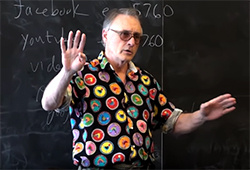
ECE 5760 lecture 2017.
This year I participate in two courses taught by Hunter Adams in Electrical and Computer Engineering, ECE
4760 in fall 2026, and ECE 5760 in spring 2027. ECE 4760 covers microcontrollers as components
in electronic design. ECE 5760 covers using FPGAs as hardware accelerators. Student
designs contains undergraduate and Masters of Engineering work in ECE, CS, and Neurobiology from 1994 to 2018.
Although retired, I am still involved with hardware and software development for the courses and for fun.
--
Pi pico page: projects using rp2040 and rp2350
--
Supporting information on antialiasing filters and motor drivers.
Projects
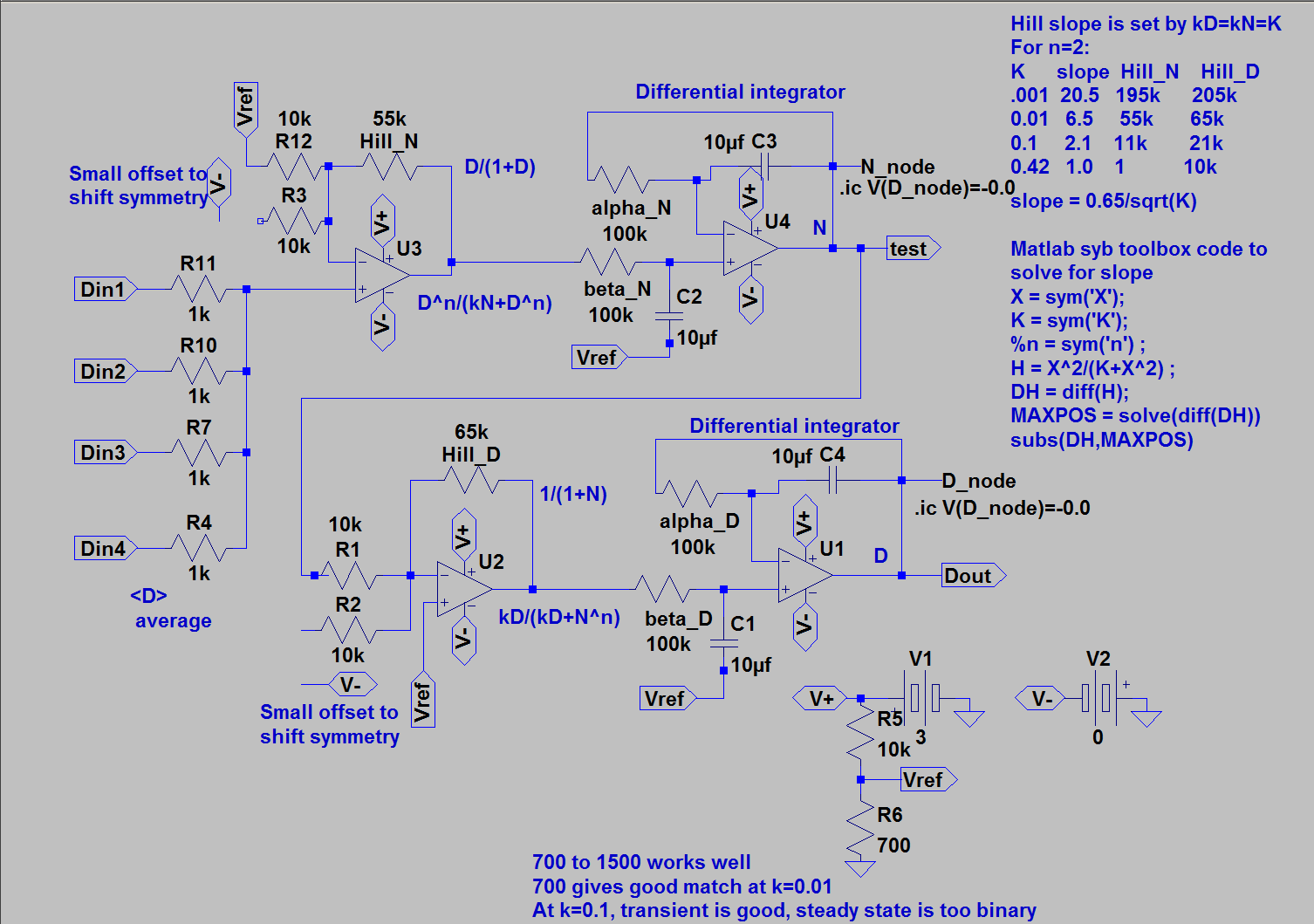
From 2010 to 2019, most hardware/software project descriptions are on the hackaday project site. An older projects list contains details of various projects from 1998-2010, including neurobiology and computer science.
The image to the right is from a 2014 paper using operational amplifier non-linear saturation to model a biological patterning system; the lateral inhibition of notch signaling (delta-notch system).
Documentation Talks and Posters | Random Bits | Older Material
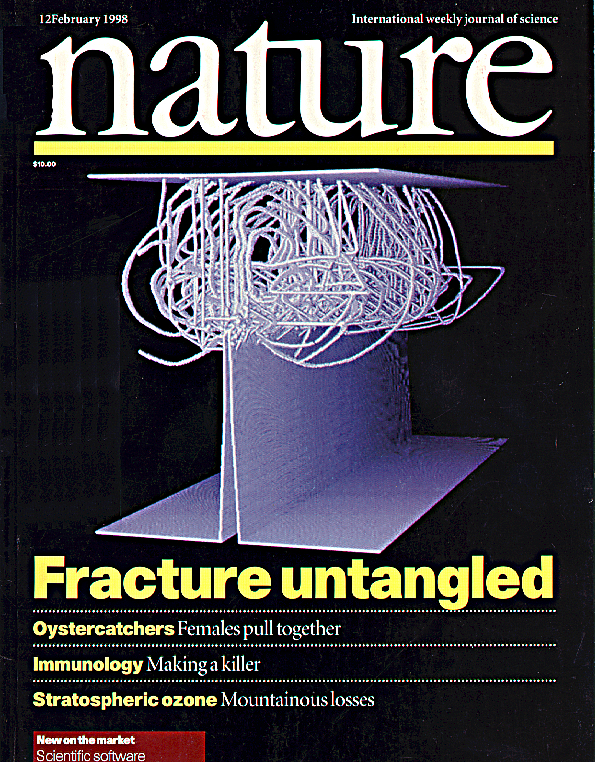
Simulated crystal fracture, 1997.
Various Journal Club talks I have given are documented, mostly for my own use. Some of the talks overlap the older projects list above and several of them contain Matlab code examples. There are also posters presented at NeuroScience and other meetings.
The Random Bits section includes some personal details, such as a resume and a list of coauthors, as well as some video and pictures taken around Cornell, and some other descriptive material.
The Older Material link points to various projects, courses, and images from the past. A still image from an animation project I did at the Cornell Theory Center in 1996 is shown on the right. The animation was based on the simulated fracture of a crystal containing more than 100 million atoms. That seemed big at the time
Location
ECE: Office: 416 CIS building Digital Lab: 238 Phillips Hall Phillips Hall (now Duffield) is under rennovation |